
When tech leaders talk about “people-first,” it often gets reduced to perks or slogans. In managed services, that kind of superficial approach fails quickly, because your “product” is human: engineers resolving incidents, service desk teams calming frustrated users, and account leaders building trust under pressure.
In other words: people-first leadership tech isn’t soft. It’s operational. It’s how you build a steady team that can deliver consistent outcomes for small and mid-sized businesses, even when everything breaks at once.
This list spotlights 15 women who prove leadership is a people business, including talent management leaders, tech HR innovators, and female chief people officers who are shaping the MSP and SMB IT world through culture, clarity, and execution.
Selection criteria:
- Female leaders with demonstrated MSP/managed services/SMB IT credibility
- Operators and people-leaders tied to service delivery, customer outcomes, and team health
- Practical, repeatable leadership behaviors
Want the MSP model behind many of these people-first principles? Explore Cortavo – an all-inclusive MSP designed to remove IT burden so growing organizations can focus on scale.
The MSP People-First Leadership Framework
Most people-first leadership content focuses on feelings and engagement. In MSPs, you also need a delivery-grade operating model. Use this 5-part lens to assess whether your culture is real:
- Calm is engineered (clear roles, escalation paths, and decision rights)
- Fairness is measurable (workload distribution, after-hours rotation, comp clarity)
- Learning is scheduled (not “when we have time”)
- Trust is operationalized (transparency in pricing, comms, and accountability)
- Retention is a service metric (because churn creates client instability)
Keep that framework in mind as you read the leaders below.
15 Women Proving Leadership is a People Business
1) Tiffany Bloomsky — CEO, Cortavo

In MSP land, leadership is rarely glamorous; it’s weighted decisions, constant prioritization, and protecting your team’s focus while clients push for “one more thing.” Tiffany Bloomsky leads Cortavo with a people-first operating mindset: build stability through structure, clarity, and accountability so teams can stay calm under load.
Cortavo’s model matters here: it’s built around simplifying IT for SMBs with predictable planning and support; shifting spend from CAPEX to OPEX and reducing surprise costs for growing organizations. In her own leadership writing, Tiffany frames scale as an operations and culture challenge, not a tools debate, emphasizing consistency, role clarity, and system fixes over “hero leadership.”
People-first moves to borrow:
- Stop being the hero: design systems so delivery doesn’t depend on one person’s memory or mood.
- Treat calm as an outcome: structure creates steadiness; steadiness protects clients and retention.
- Align revenue to delivery: sustainable growth requires marketing, sales, onboarding, service, and account teams moving as one.
2) Julie Haley — CEO, Edge Solutions

If you want proof that people-first leadership shows up in business results, look at hiring philosophy. Julie Haley emphasizes hiring for values and building a culture where employee well-being supports extraordinary customer service and retention.
Steal this: Write down your “non-negotiable behaviors” (how you handle escalations, client conflict, and accountability) and hire/promote against them, every quarter.
3) Karyn Schell — President, DP Solutions

Security programs fail when teams are overloaded and reactive. Karyn Schell’s leadership is closely tied to proactive security posture and service evolution, pushing new security offerings to better protect clients.
Steal this: Make “prevention time” a calendar rule (e.g., 10–15% of capacity reserved weekly). If it’s optional, it disappears.
4) Robyn Howes — President, Certified Nets

People-first leadership is also client education. Robyn Howes is noted for educating clients through webinars and security awareness, helping business owners understand posture rather than just buying tools.
Steal this: Run a monthly “calm security briefing” for SMB clients – short, consistent, and jargon-free. It reduces panic tickets and builds trust.
5) Pam Diaz — CEO, Entara

A people-first leader doesn’t squeeze struggling clients to the breaking point. Pam Diaz highlights empathy in pricing decisions and client partnerships, thinking long-term trust over short-term margin.
Steal this: Create an “empathy clause” policy: what you can flex (timing, phased rollouts, temporary adjustments) without compromising security.
6) Leah Freiman — CEO, ITCon

Leah Freiman’s leadership lens is pragmatic: partnerships matter, but you can’t outsource your core. That mindset protects teams from dependency traps and keeps your engineers focused on what differentiates you.
Steal this: Define “core” in writing (your client experience, escalation standards, onboarding methodology). Partner everywhere else.
7) Karen Greer — CEO, Secure Content Technologies

Karen Greer’s growth story is rooted in listening; customers signal what they need, and technical teams see friction first. She also underscores delegation and letting specialists shape service evolution.
Steal this: Add a “frontline signal review” to leadership meetings: top 5 recurring frictions engineers see, and the system change to remove each.
8) Maryann Pagano — CEO, BlackHawk Data

In channel leadership coverage, Maryann Pagano is positioned as customer-outcome oriented, staying close to vendors and solutions to ensure clients get the best support and outcomes.
Steal this: Hold a quarterly “outcome audit”: where did your client experience degrade, and what changed in process, not who worked harder.
9) Deana Pizzo — CEO & Co-Founder, I.T. Solutions of South Florida

Deana Pizzo’s messaging centers on partnership and making technology approachable, explicitly framing success as human trust, not technical intimidation. The organization is also recognized in MSP lists and workplace awards coverage.
Steal this: Train service desk language like a product: write “approved phrases” for high-stress moments (breach fear, downtime, payroll failure).
10) Dr. Alicia Makaye — President & CEO, GXA

Operational excellence often happens “behind the scenes.” Dr. Alicia Makaye is described as building infrastructure and systems that drive company success; classic people-first leadership that prizes process, enablement, and durable execution.
Steal this: Put one system improvement per month on the scoreboard (handoffs, documentation, onboarding checklist, escalation paths).
11) Sharon Woods — President & CEO, ITS

Sharon Woods’ profile explicitly ties leadership to culture: values, unity, ethics, and “family first” priorities, showing how leadership choices shape retention and service consistency.
Steal this: Make one cultural value operational each quarter (e.g., “ownership” = ticket follow-through standards + escalation etiquette).
12) Nancy Sabino — Co-Founder & Co-Owner, SabinoCompTech

Nancy Sabino’s story highlights what it looks like to lead in a historically insular industry and still center fairness and credibility, building an MSP while navigating bias and visibility pressures.
Steal this: Build a “proof over volume” leadership habit: short decisions, documented standards, consistent follow-through.
13) Debbie Lawrence — Chief People Officer, Integris

If you want a clean example of people-first at the executive level, Debbie Lawrence was appointed CPO with the mandate to champion employee fulfillment, development, and culture, explicitly tied to a “People First” value.
Steal this: Treat retention like a delivery KPI: track regrettable attrition, internal mobility, and time-to-productivity by role.
14) Mary Beth Hamilton — CMO & SVP, Regional Offices, Dataprise

People-first leadership also includes how you align teams and partners to drive sustainable growth. Mary Beth Hamilton is cited for strengthening partner relationships and enabling go-to-market collaboration, work that reduces internal friction and improves execution.
Steal this: Create a “one-page partner motion” for every major vendor: who owns what, how leads flow, and how delivery stays protected.
15) Karen Penticost — VP, Client Success & Channel Strategy, Envision Technology Advisors
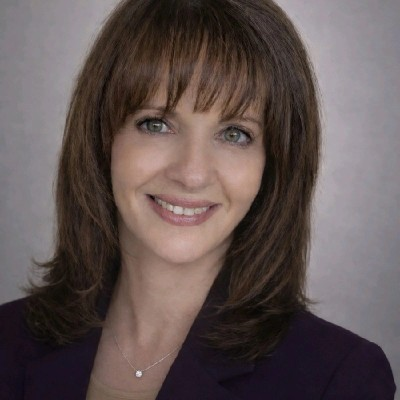
Client success is where people-first becomes visible. Karen Penticost is noted for evaluating partnerships and focusing on collaborative growth, tightening alignment to what can actually be delivered well.
Steal this: Kill “zombie offerings” quarterly; anything your team can’t deliver consistently without burnout or quality drops.
Final Thoughts: Leadership is the delivery engine
Much of the content about people-first leadership tend to stay conceptual. In MSPs, it becomes real in the middle of an outage, during a difficult client conversation, or when your best engineer is close to burnout.
If you want to operationalize people-first leadership tech for a growing business, without relying on heroics, start with structure, fairness, and calm execution.
Next step: Visit Cortavo to see how an all-inclusive MSP model supports predictable IT operations for SMB and mid-sized teams.
FAQ
What is people-first leadership, and what does it look like in practice in tech?
People-first leadership is a leadership approach where the primary lever for results is how well you enable, protect, and grow people, not how hard you push outputs. In tech, it looks like:
Clarity over chaos: defined priorities, roles, decision rights, and escalation paths so teams can execute without constant firefighting.
Psychological safety + accountability: people can raise risks early (security gaps, quality issues, capacity constraints) without being punished, while still owning outcomes.
Skill-building by design: scheduled learning, mentoring, and career paths, especially for fast-changing areas like security, cloud, and automation.
Sustainable pace: workload management, realistic on-call rotations, and guardrails against “hero culture,” which is a major driver of burnout in IT operations.
In managed services specifically, people-first leadership shows up as lower ticket reopens, higher first-contact resolution, and more consistent client communication, because teams are supported enough to do the job well.
What leadership style puts people first, and how is it different from traditional leadership?
Use a mix of people metrics + operational metrics. Examples:
Retention quality: regrettable attrition rate, retention of top performers, internal mobility/promotion rates.
Workload health: on-call fairness, after-hours ticket distribution, PTO usage patterns (people actually taking it).
Capability growth: training hours completed, certifications earned, mentorship participation, time-to-productivity for new hires.
Operational outcomes tied to leadership: ticket reopen rate, first-contact resolution, CSAT by team, escalation volume, incident postmortem action completion.
Trust indicators: “speak-up” signals (risk reporting, early flagging of capacity issues) and whether feedback leads to visible change.
A practical rule: if performance improves while burnout and churn decrease, leadership is likely people-first in reality, not just in messaging.
How can leaders balance people-first leadership with performance targets and business results?
People-first leadership does not mean lowering standards; it means building the conditions where high performance is sustainable. The balance comes from:
Setting clear, measurable expectations (SLAs, quality standards, project outcomes) and making them visible.
Managing capacity like a resource, not a vibe: protect focus time, limit context switching, and reserve bandwidth for prevention/maintenance.
Linking targets to systems: if a KPI is missed, fix the process (handoffs, tooling, training, scope control) before blaming individuals.
Using “guardrail metrics” alongside growth metrics, e.g., revenue growth paired with attrition, on-call load, and CSAT.
In MSP/IT support specifically: aggressive growth targets without delivery guardrails typically produce short-term wins and long-term churn (both clients and employees).
What are real examples of people-first leadership in the workplace?
Real examples are usually behavior + policy combinations that protect people while improving delivery:
No-blame incident reviews with mandatory follow-through: focus on systemic fixes, not scapegoats.
Transparent career ladders (what “good” looks like at each level) and structured promotion cycles.
Fair on-call rotations with compensation/time-off, and clear rules for what qualifies as an emergency.
Protected learning time (e.g., 2–4 hours biweekly) that cannot be overwritten by routine meetings.
Scope and intake discipline: a standard process for prioritizing work so teams aren’t forced into constant reactivity.
Communication standards: defined response expectations for clients/users, templates for high-stress incidents, and training on de-escalation.