
Digital transformation can be over-hyped. For small and mid-sized businesses (SMBs), it is far more practical: fewer outages, faster onboarding, tighter security, less vendor chaos, and technology that scales without “bill shock.”
This ranked list of the best female CIOs highlights US-based women leaders who are delivering measurable modernization, whether they run global IT organizations or lead transformation through an SMB-first operating model.
Because Cortavo is built for growing organizations that need “enterprise-grade” outcomes without enterprise complexity, we ranked leaders whose work maps to what SMBs actually need: operational clarity, secure standardization, and execution that holds up under real-world pressure.
What “Digital Transformation” Actually Means for SMBs
For most small and mid-sized businesses, digital transformation typically shows up in six outcomes:
- Less downtime, faster resolution
Reduced ticket volume and faster recovery when issues happen, because support is structured, monitored, and standardized. - Security that doesn’t rely on luck
Identity controls, patching discipline, endpoint management, and clear policies that reduce risk without paralyzing teams. - Standardized devices and environments
Fewer “it depends” setups. More consistency across laptops, logins, tools, and access is especially important in hybrid work. - Repeatable onboarding and offboarding
Faster provisioning, fewer access mistakes, and better compliance, without a hero engineer holding everything in their head. - Vendor consolidation and cost predictability
Fewer surprise invoices, fewer unmanaged tools, and clearer accountability when something breaks. Cortavo’s flat-fee positioning maps directly to this pain point. - Operational leverage for internal IT (when it exists)
Co-managed support so internal IT leaders can focus on projects (ERP, analytics, workflow automation) rather than Tier 1 noise.
How We Vetted and Ranked These Top-Ranked Chief Information Officers
To keep this list credible and publication-safe, each of these top-ranked chief information officers met a consistent, evidence-based standard:
- Role verification: Confirmed via company leadership pages and/or official press releases.
- Transformation evidence: Confirmed via credible third-party coverage or official statements describing modernization scope, operating-model change, or measurable IT outcomes.
- US-only: Leaders currently serving US organizations (and publicly positioned in US roles).
- Real transformation leadership: Not billionaire “unicorn” mythology. Leaders whose work translates into repeatable playbooks for SMB and midmarket environments.
Ranked List: Women Leaders in Digital Transformation
1. Tiffany Bloomsky — President & CEO, Cortavo

Who she is
If you’ve ever wished your IT “just worked” without surprise invoices or constant firefighting, Tiffany Bloomsky is building exactly that outcome at scale as President & CEO of Cortavo.
Why she’s #1 on this list
Most digital transformation talk is enterprise-shaped. Tiffany’s is SMB-shaped, because Cortavo is designed to give growing businesses the stability, security, and speed they need without needing a sprawling internal IT department.
Cortavo’s all-inclusive model focuses on predictable execution: the day-to-day support layer, the security layer, and the connectivity layer, all structured to reduce chaos and keep teams moving.
What makes Tiffany stand out is the operator mindset: in her thought piece, What Scaling an MSP Into 2026 Really Requires, she writes about how scaling an MSP (and delivering consistently) requires discipline, documentation, and a delivery engine that doesn’t rely on heroics. That is the unglamorous work that actually makes transformation stick.
Her digital transformation signature
- “Predictability is the product.” Clear scope, clear standards, and a service model clients can trust under pressure.
- Systems over improvisation. Repeatable onboarding, reporting rhythms, and operating discipline that scale past any one person.
- CIO-grade outcomes for SMBs. Making IT feel like a utility – reliable, measurable, and easy to budget.
What aspiring women in IT can copy this week
- Take your top 10 recurring tickets and turn them into a root-cause improvement plan (then fix the system, not the symptom).
- Write a one-page “this is how we work” doc: response expectations, escalation, ownership, and communication cadence. Trust loves clarity.
- Standardize onboarding so growth doesn’t multiply disorder – devices, accounts, permissions, and checklists should be boring (that’s the point).
2. Ann Dozier — Chief Information Officer, Ahold Delhaize USA

Who she is
From the center of high-volume operations, Ann Dozier oversees enterprise technology at Ahold Delhaize USA. She lives where transformation is hardest: large-scale operations that cannot afford instability.
Why she’s on this list
Her CIO remit is directly tied to enabling US business performance across a complex enterprise footprint, where the real work is coordinating systems, standards, and execution so the business runs reliably.
Her digital transformation signature
- Enterprise modernization that prioritizes operational performance and governance, because scale punishes inconsistency.
What aspiring women in IT can copy this week
- Create a “non-negotiables” baseline (patching, MFA, device standards) and enforce it consistently.
- Stop treating tool sprawl like growth – consolidation is often the fastest transformation win.
- Build dashboards leadership actually understands: downtime, time-to-resolution, and risk exposure.
3. Sharon Mandell — SVP & Chief Information Officer, Juniper Networks

Who she is
At Juniper Networks, Sharon Mandell serves as SVP & CIO, steering global IT with a business-transformation lens.
Why she’s on this list
She has been highlighted for leadership that supports Juniper’s evolution and strategic direction – proof that the CIO job is no longer “internal IT,” but business transformation leadership delivered through technology.
Her digital transformation signature
- Business-aligned IT: operating model, architecture, and delivery choices tied to strategic shifts.
What aspiring women in IT can copy this week
- Name your “business promises” (speed, reliability, security), then align IT work to them.
- Build an “IT portfolio” view so you stop modernizing everything at once.
- Prove value with one high-impact win, then scale the pattern.
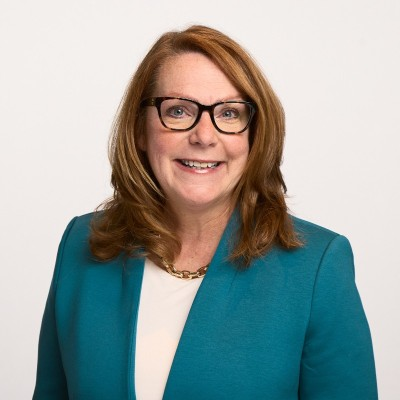
4. Kim Basile — Chief Information Officer, Kyndryl
Who she is
Leading internal technology at Kyndryl, Kim Basile operates in an environment where execution standards are non-negotiable.
Why she’s on this list
Her appointment is positioned within a modernization context tied to cloud, data, and AI priorities, where the CIO has to bring structure, governance, and repeatability to keep progress real.
Her digital transformation signature
- Modernization leadership that treats internal IT performance as a credibility standard, not an afterthought.
What aspiring women in IT can copy this week
- Standardize endpoint and identity controls before expanding the stack.
- Assign owners for every critical system and escalation path – ambiguity is the enemy.
- Track transformation by reduced operational load (tickets, outages, manual work).
5. Amy Sweeney — Chief Information Officer, Coupa

Who she is
Charged with scaling operations through modernization, Amy Sweeney stepped into Coupa’s CIO role with efficiency and execution in focus.
Why she’s on this list
Coupa’s announcement connects her remit to scaling and efficiency: clear transformation intent, framed in business outcomes rather than tech theater.
Her digital transformation signature
- Efficiency-led transformation through modernization and automation of business operations.
What aspiring women in IT can copy this week
- Pick one workflow where people waste time every day and automate it end-to-end.
- Tie projects to business metrics (hours saved, errors reduced, cycle time improved).
- Standardize onboarding/offboarding – it is a compounding efficiency gain.
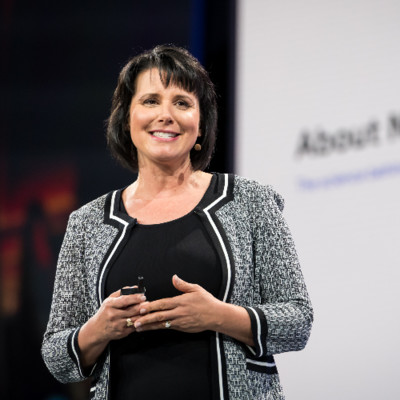
6. Kim Anstett — Chief Information Officer, Trellix
Who she is
In a security-first context, Kim Anstett leads at Trellix, where resilience and disciplined operations are central.
Why she’s on this list
Her CIO remit sits inside a business where trust and protection are the product, meaning internal transformation must be regimented, secure-by-design, and execution-heavy.
Her digital transformation signature
- Security and operational resilience built into the transformation operating model.
What aspiring women in IT can copy this week
- Turn security into defaults: baseline configs, enforced identity policies, and patch cadence.
- Stop relying on “tribal knowledge” for risk – document and standardize.
- Use incident trends to prioritize systemic fixes (not more firefighting).
7. Claire Rutkowski — Chief Information Officer, POWER Engineers

Who she is
Working at the intersection of complex delivery and technology agenda-setting, Claire Rutkowski is CIO at POWER Engineers (member of WSP).
Why she’s on this list
Her publicly positioned focus centers on executing comprehensive technology agendas – exactly the kind of leadership that makes transformation durable rather than episodic.
Her digital transformation signature
- Practical modernization anchored to execution discipline and operational realities.
What aspiring women in IT can copy this week
- Put governance first: decision rights, owners, escalation.
- Standardize the core environment to reduce support friction.
- Turn processes into checklists so scale does not break delivery.
8. Laura Groschen — Chief Information Officer, Acadia Healthcare

Who she is
With “it has to work every day” stakes, Laura Groschen drives IT strategy at Acadia Healthcare.
Why she’s on this list
Acadia frames her role around shaping strategy and driving ongoing digital transformation – clear scope in a regulated, high-stakes operating environment.
Her digital transformation signature
- Transformation that balances modernization with reliability, compliance expectations, and operational continuity.
What aspiring women in IT can copy this week
- Build identity and access discipline early (it is a security and workflow win).
- Modernize workflows that reduce frontline friction first.
- Treat uptime as a business KPI and assign clear incident ownership.
9. Debbie Taylor — Chief Information Officer, DIRECTV

Who she is
Customer experience pressure is constant at DIRECTV, and Debbie Taylor leads the technology function, balancing modernization with reliability.
Why she’s on this list
Her executive profile emphasizes secure, customer-focused solutions powered by modern practices. It’s an accurate snapshot of what “good CIO transformation” looks like in 2026: secure, reliable, and experience-led.
Her digital transformation signature
- Customer-centric modernization with security and operational excellence built in.
What aspiring women in IT can copy this week
- Monitor the systems that impact customers first (visibility reduces panic).
- Make secure-by-default non-negotiable for delivery teams.
- Reduce incident handoffs – clarity and speed beat perfect documentation in the moment.
10. Pamela Parisian — Chief Information Officer, Compassion International

Who she is
Notably brought in as Compassion International’s first-ever CIO, Pamela Parisian established executive accountability for technology as a strategic capability.
Why she’s on this list
Establishing a first-ever CIO function is a transformation signal: it formalizes governance, prioritization, and enterprise-wide modernization as leadership work, not “support work.”
Her digital transformation signature
- Turning technology leadership into an enterprise operating rhythm: priorities, governance, accountability, and measurable outcomes.
What aspiring women in IT can copy this week
- Set a weekly rhythm: metrics, risks, escalations, decisions.
- Communicate tradeoffs in business language (time, cost, risk).
- Kill ambiguity: every system needs an owner and a backup owner.
What SMB Leaders Can Learn From These Women Leaders in Digital Transformation
Across all ten leaders, the repeatable SMB takeaways are consistent:
- Transformation is an operating model, not a tool purchase.
Standardization, documentation, governance, and predictable delivery do more than any “platform of the month.” - Security is inseparable from modernization.
Identity, patching discipline, endpoint controls, and auditability are foundational, especially as SMBs face enterprise-grade threats. - Reducing noise creates capacity for strategy.
The clearest throughline is operational load reduction: fewer escalations, fewer repetitive tickets, fewer “surprises.” - CIO success is measured in business outcomes.
Downtime avoided, onboarding accelerated, costs stabilized, and risk reduced are the metrics that matter to CEOs and CFOs.
If your internal team is stuck in Tier 1 work (or you do not have internal IT at all), the practical path to transformation is not “hire five people.” It is building an execution layer that creates leverage, often through a managed or co-managed partner structure.
Final Thoughts
The modern CIO job is less about running systems and more about building the conditions for growth: predictability, security, standardization, and execution discipline.
If your organization is growing and IT is becoming a bottleneck – too many tickets, too many tools, too many vendors – consider an operating model that lets your internal team focus on strategy while day-to-day execution is handled by a dedicated partner. Cortavo is built for that reality.
If you want an all-inclusive, SMB-first approach to reducing IT noise while improving security and reliability, explore Cortavo’s managed IT solutions.
FAQ
What does a CIO do in digital transformation?
A CIO translates business goals into technology priorities, then builds the operating model to execute: governance, security standards, system ownership, vendor strategy, delivery rhythms, and measurable outcomes (uptime, speed, risk reduction).
What makes the best female CIOs different from traditional IT leaders?
In high-performing examples, the difference is not gender; it is approach: business-first framing, operational discipline, clear metrics, and a bias toward repeatable systems over hero-based firefighting.
How do CIOs measure digital transformation success?
Common metrics include: reduced downtime, faster incident response, improved security posture (patch/identity compliance), faster onboarding, lower tool sprawl, better user experience, and cost predictability.
What is co-managed IT and when does it make sense?
Co-managed IT is a shared model where an internal IT leader/team retains strategy and key ownership while a partner handles operational execution (help desk, monitoring, patching, security operations). It makes sense when internal IT is overworked or when transformation projects stall due to daily ticket volume.
How can SMBs modernize IT without hiring a full internal team?
By standardizing the environment (identity, devices, patching, monitoring), consolidating vendors/tools, documenting repeatable processes, and using an MSP/co-managed partner to absorb day-to-day operational load.
What should an SMB ask before choosing an MSP partner?
Ask for clarity on: what is included vs. out of scope, response and escalation process, security baseline approach, onboarding process, device lifecycle handling, reporting cadence, and how success is measured (not just “tickets closed”).