
Atlanta Tech Village has long been a proving ground for builders who want to grow real businesses, not hype. If you’re searching for the top Atlanta tech founders, the candidates below stand out for one reason: they are creating practical, defensible companies that serve customers, hire teams, and scale in the real world.
This list highlights Atlanta Tech Village women who are founders (not celebrity operators) and working on ventures that map to the realities of the SMB and midmarket economy, where execution, trust, and operational discipline matter.
Quick takeaways (why these founders matter to SMB leaders)
- They build with constraints: budget, headcount, time, and customer expectations.
- They prioritize systems over heroics – exactly what sustainable growth requires.
- Their companies touch high-impact categories for modern small businesses: IT operations, healthcare tech, fintech, GovTech/enterprise services, and B2B productivity.
How this list was vetted
To keep this credible, every founder included meets these criteria:
- Female founder with a public founder/CEO/leadership attribution.
- Direct, documented tie to Atlanta Tech Village, via Atlanta Tech Village’s own founder features and/or its “It Takes a Village” startup cohort announcements.
- Building in the SMB-to-midmarket reality (not “unicorn-only” narratives).
The 12 most influential female tech founders in Atlanta Tech Village
1. Tiffany Bloomsky — Cortavo

If you’re looking for the founder whose work most directly affects how small and mid-sized businesses operate day-to-day, it’s Tiffany Bloomsky.
As President & CEO, she leads Cortavo’s strategy and growth, positioning managed IT not as a “break-fix vendor,” but as an operational utility SMBs can rely on. On her site, Bloomsky frames the mission clearly: building scalable, secure IT organizations for small and mid-sized businesses.
What separates Tiffany’s leadership is that it’s built for the real constraints founders face: decision fatigue, downtime risk, security expectations, and the need for predictable costs. She asserts that scaling isn’t primarily a tooling problem; it’s a leadership and operations discipline problem (culture, delivery consistency, and systems that work when the CEO isn’t the bottleneck).
Why she’s #1 on this list
- She’s building a services business designed around repeatability—which is the hidden superpower for SMB growth.
- She puts operational clarity and culture at the center of scale (instead of “move fast and patch later”).
Her signature approach
- Stop being the hero; build the system.
- Treat consistency and predictability as the product.
- Align marketing, sales, onboarding, and service delivery so growth doesn’t break the team.
What SMB operators can copy this week
- Identify the top 3 “repeat tickets” in your business and fix the process behind them (not the symptom).
- Define “what good looks like” for response times and ownership, then document it.
- Remove one recurring decision from your plate by turning it into a standard operating rule.
2. Lisa S. Jones — EyeMail

Most founders avoid email because it’s unforgiving: tight technical constraints, inconsistent rendering, and little margin for error. Lisa S. Jones built straight into that complexity with EyeMail, focused on enabling video/audio experiences inside email.
Why she’s influential
- Built a differentiated video-in-email approach designed to play inside inboxes (rather than relying on thumbnails or external links), solving a persistent marketer pain point.
- Recognized as a practitioner-voice in email innovation, sharing implementation-level insight on video email strategy and adoption.
What to copy this week
- Pick one distribution channel (like email) and become unusually good at one measurable outcome (opens, clicks, conversions).
3. Chrissa McFarlane — Patientory

In healthcare, “innovation” only counts when it earns trust and protects users. Chrissa McFarlane’s work with Patientory sits in that high-stakes lane, where data, access, and accountability are foundational, not optional.
Why she’s influential
- Founded a health-tech company focused on consumer-driven, secure health information systems, applying blockchain to real healthcare data challenges.
- Holds visible industry leadership roles tied to interoperability/blockchain in healthcare (e.g., HIMSS workgroups/committees), extending influence beyond her own product.
What to copy this week
- Turn your toughest compliance constraint into your clearest positioning line—then build content around it.
4. Rachel McCrickard — Motivo

Some of the most important tech doesn’t face customers first; it supports the people doing the hardest work. Rachel McCrickard’s focus with Motivo centers on strengthening clinicians and the infrastructure around mental healthcare delivery.
Why she’s influential
- Built Motivo into a scaled platform connecting pre-licensed clinicians with virtual clinical supervisors, addressing a known bottleneck in the therapist pipeline.
- Demonstrated market validation through institutional coverage and capital formation, including a reported $14M raise to expand the model.
What to copy this week
- Make your onboarding experience your differentiator: reduce friction, reduce uncertainty, and clarify outcomes early.
5. Diane Bloodworth — scoutSMART

Some founders build for attention; Diane Bloodworth built for rigor. Long before “data-driven” became a cliché, she was applying analytics to sports strategy and decision-making, then iterating until the market caught up. She developed and pivoted products that include scoutPRO, aligned to her sports-and-tech thesis.
Why she’s influential
- Demonstrated founder adaptability and market learning through product iteration and pivoting (including the scoutSMART chapter) rather than forcing a misfit idea.
- Brings deep, long-horizon expertise across analytics, software development, and IT operations – credibility that translates into influence in technical founder circles.
What to copy this week
- Build your “operator’s dashboard”: 5 metrics you check weekly that directly map to customer outcomes.
6. Alice Thacker — Gatsby

If you’ve ever tried to coordinate a dinner, a birthday weekend, or a group trip, you already understand the problem: group plans fall apart when logistics live across ten different threads. Alice Thacker founded Gatsby to reduce that coordination friction, turning “who’s coming, when, where, and how do we decide?” into a single, structured flow.
Why she’s influential
- Earned credibility through founder-facing platforms and operator communities, appearing as a presenter in Atlanta’s startup event circuit (Atlanta Startup Convos)
- Built Gatsby as a consumer coordination product aimed at reducing the real friction of planning group get-togethers, turning a universal annoyance into a focused product thesis.
What to copy this week
- Replace one recurring “coordination mess” in your business (handoffs, scheduling, approvals) with a single owner + a single source of truth, then measure whether cycle time drops within 7 days.
7. Avani Patel — CFO 180

For most SMBs, growth gets messy before it gets exciting, especially in finance, forecasting, and operational visibility. Avani Patel’s CFO 180 sits squarely in that practical operator category, supporting the fundamentals that keep scaling companies stable.
Why she’s influential
- Built The CFO 180 as a practical finance-ops enablement platform, offering pre-hire assessments, micro-credentials, and training for accounting and finance roles, so SMBs can hire and upskill with less risk and faster time-to-impact.
- Brings finance leadership credibility (CPA/MBA) into the startup/SMB operator lane – an influence point for founders who need better financial control to scale.
What to copy this week
- Productize one repeatable financial insight (cash runway, unit economics, margin drivers) into a simple recurring deliverable.
8. Smitha Kommareddi — eStreamly
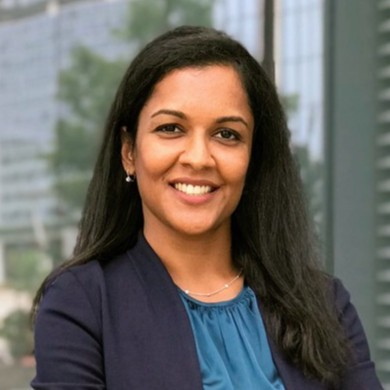
Smitha Kommareddi sits at the intersection of commerce and product engineering, building for the real friction buyers feel when video, checkout, and conversion don’t connect cleanly. She leads eStreamly, focused on enabling shoppers to purchase within video experiences without leaving the video flow.
Why she’s influential
- Co-founded a live, shoppable video platform focused on keeping shopping “in-video,” aligning product design with modern commerce behavior shifts.
- Earned credible external validation through platform/tech ecosystem adoption and coverage (including AWS use-case visibility and mainstream startup press).
What to copy this week
- Tighten your “one sentence” narrative: who you help, what problem you remove, and what outcome changes.
9. Kristin Bell — ReviewTailor
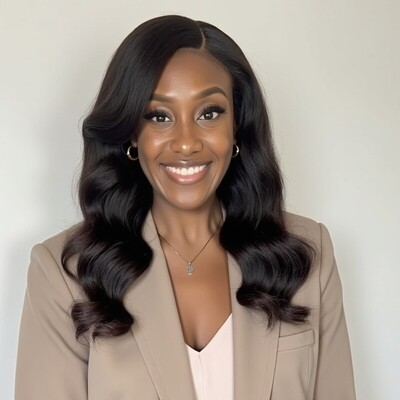
Performance reviews are one of those “everyone hates it, everyone needs it” workflows, and that’s exactly why they’re ripe for reinvention. That’s why Kristin Bell created ReviewTailor, positioned as a product tackling more equitable and timely performance review processes.
Why she’s influential
- Co-founded a performance management platform aimed at simplifying reviews, goals, and feedback loops – an operational pain point that hits SMBs hardest.
- The product positioning emphasizes faster, more structured review creation (including AI-assisted drafting), indicating a modern approach to managerial throughput.
What to copy this week
- Replace “features” with “proof”: one customer story, one metric, one before/after.
10. Sheila Maithel — Brillist Better Projects

Construction projects don’t fail because teams don’t work hard; they fail because coordination breaks, visibility disappears, and risks compound quietly. Sheila Maithel leads Brillist Better Projects, focusing on improving construction project outcomes.
Why she’s influential
- Leads a construction-outcomes-focused product mission centered on reducing the “late and over budget” pattern that drains margin and trust in projects.
- Demonstrated ecosystem-level traction and operator credibility through participation in established scale programs and founder-stage visibility.
What to copy this week
- Run a 5-customer discovery sprint and document patterns—not opinions.
11. Bryanna Marshall — Carit

Maternal and postpartum care is an outcomes problem, not a content problem. Support has to be timely, structured, and easy to access. Bryanna Marshall leads Carit, a maternal and postpartum care company supporting moms’ wellbeing across stages of motherhood.
Why she’s influential
- Built a maternal/postpartum care company oriented around connecting moms to relevant licensed support and resources – high-impact healthcare access use case.
- Recognized publicly as founder/CEO in third-party founder and media contexts, reinforcing her visibility and leadership footprint in women’s health innovation.
What to copy this week
- Add one “decision remover” to your product or service (a template, automation, checklist, or standard plan).
12. Carrie McKinnon — 28ish

The best FemTech founders don’t just build an app; they build a language for what people have been taught to ignore. Carrie McKinnon is the founder of 28ish, a company and app centered on menstrual cycle education and support.
Why she’s influential
- Founded a menstrual health and cycle awareness platform that targets a large, underserved education and wellbeing gap with a consumer-friendly product approach.
- Positioned publicly as a FemTech founder/CEO advocating for cycle literacy and stigma reduction – an influence driver that extends beyond product into category narrative.
What to copy this week
- Build a simple operating rhythm: weekly metrics review, customer feedback review, and one “system fix” every Friday.
What These Atlanta Tech Village Women Founders Teach SMB Leaders About Scaling
Scaling is rarely about a single breakthrough. It’s usually about removing friction, then removing it again, until the business runs reliably without the founder acting as the glue.
The 5 repeatable patterns
- Systems beat heroics
High-performing founders don’t “save the day” repeatedly; they fix the underlying pattern so the same fire doesn’t keep coming back. Tiffany Bloomsky’s scaling lessons emphasize building repeatable operations (onboarding, standards, training, and rhythms) so growth doesn’t turn the CEO into the bottleneck. - Predictability becomes a product
As you scale, customers pay for outcomes they can count on: clear scope, consistent response, and stable delivery. Bloomsky explicitly frames predictability as a core lever for retention and a calmer operating model. - Customer success isn’t separate from revenue
In durable SMB businesses, marketing, sales, onboarding, delivery, and account management either reinforce each other or they quietly create churn. Bloomsky calls out cross-department alignment as essential to scaling without breaking service. - Security and risk are treated calmly, not theatrically
The best founders don’t sell fear. They explain risk in plain language, document decisions, and build stable habits that reduce exposure as the company grows. - Community is a growth lever, not a nice-to-have
Atlanta’s ecosystem rewards founders who show up consistently, sharing lessons, hiring talent, and building relationships that compound. Atlanta Tech Village positions its mission around faster connections between “talent, ideas and capital,” and its Women + Tech initiative is explicitly designed to support women as leaders and builders in the startup community.
If You’re Building in Atlanta, Your IT Has to Scale Like a Utility
Atlanta businesses move quickly: new hires, new tools, new locations, new compliance expectations. The problem is that many SMBs still run IT like a side quest: a patchwork of vendors, “volunteer IT,” and reactive support.
The better model is to run IT like a utility: predictable, always-on, and designed to scale with the business. Cortavo even describes its flagship approach in those terms – like water, electric, and gas supporting infrastructure – positioning “Techtility” as all-inclusive IT that includes support, cybersecurity, and core infrastructure.
The 3 IT failure modes we see in growing SMBs
- Volunteer IT burnout
A capable non-IT teammate becomes the unofficial help desk. It works until it doesn’t – usually when downtime hits at the worst time. - Fragmented tools and vendors
Many providers cover only part of the stack, leaving you to manage gaps and multiple vendors. Cortavo explicitly contrasts itself with that partial-coverage model by positioning “complete managed IT solutions” that consolidate vendors and costs. - Budget shock and surprise invoices
Unpredictable spend makes leadership hesitant to request help, then issues worsen. Cortavo’s positioning repeatedly emphasizes flat-fee, all-inclusive plans intended to consolidate costs and reduce surprise charges.
The “Techtility” idea: what “all-inclusive” should mean
For SMB operators, “all-inclusive IT” should translate to:
- A single accountable team for day-to-day support (service desk)
- Standardized security and maintenance habits (patching, backups, monitoring)
- Connectivity and core workplace infrastructure that doesn’t break under hiring or growth
- Clear, predictable commercial terms so IT doesn’t create decision fatigue
Final Thoughts
Atlanta’s strongest founders are rarely the loudest. They’re the ones building businesses that survive contact with reality: tight budgets, lean teams, demanding customers, and constant change.
The women featured here reflect that operator-first mindset: turning persistent problems into practical products and services that help organizations run cleaner, faster, and more predictably.
For SMB leaders, the takeaway is simple: scale happens when systems replace heroics and infrastructure holds up under growth. If IT is still a daily distraction – slowing onboarding, creating downtime, or driving surprise costs- it may be time to run technology like a utility.
Explore Cortavo for all-inclusive managed IT support.
FAQ
What is Atlanta Tech Village and who is it for?
Atlanta Tech Village describes its mission as supporting entrepreneurs through a community that promotes faster connections between “talent, ideas and capital.” In practice, it serves founders and startup teams who benefit from proximity, programming, and an active builder network.
How do you join Atlanta Tech Village?
Atlanta Tech Village outlines a straightforward process: (1) attend a required member tour and (2) apply for membership (details are provided during the tour).
How did you vet these top Atlanta tech founders?
Each founder was selected based on documented, public Atlanta Tech Village materials (e.g., founder features and/or program cohort announcements), and we limited the scope to female founders with a clear US-based operating footprint to keep the list aligned with SMB-realistic leadership. (Methodology is summarized above the ranked list.)
What are the best women tech startups Atlanta SMBs should watch?
The best ones for SMB leaders are the companies that improve reliability and execution – IT operations, healthcare workflows, finance/ops visibility, customer experience, and team productivity. Use the ranked list in this article as a filtered watchlist, then evaluate each company based on proof of outcomes, clarity of scope, and ease of adoption.
When should an SMB switch from DIY IT to managed IT?
Typically, when any of the following become true:
Downtime is recurring and materially expensive
Security expectations rise (clients, insurers, regulators) and you lack time to keep up
You’re managing multiple vendors/tools with unclear accountability
You want predictable budgeting and fewer surprise costs (a common reason SMBs seek all-inclusive plans)
What is co-managed IT, and who is it best for?
Cortavo defines co-managed IT as supplemental support for an internal IT department, not a replacement, helping with monitoring, maintenance, and troubleshooting so internal staff can focus on higher-value work. It’s best for SMBs and midmarket teams that have internal IT capacity but need coverage, specialization, or bandwidth.