
For managed service providers (MSPs) and SMB-focused tech firms, company culture directly impacts ticket quality, customer empathy, retention, security hygiene, and the ability to scale without burnout.
This listicle spotlights 10 U.S.-based women CEOs who are workplace culture innovators; leaders building high-performance environments with clear values, modern people practices, and measurable execution. The goal is practical: steal what works.
| About Cortavo: Cortavo is an all-inclusive MSP delivering managed IT, connectivity, and help desk support for small and mid-sized businesses with predictable pricing and an “IT-as-a-utility” mindset. |
How we vetted these workplace culture innovators
To keep this list credible (and aligned with SMB realities), each leader had to meet all criteria:
- CEO/Chairman-CEO with a verifiable source
- Leads a company in SMB tech, IT services, MSP, cybersecurity/IT delivery, or workforce tech
- Evidence of transforming tech culture through explicit values, people systems, recognition, customer-centric operations, or DEI leadership
- Not selected for celebrity status; selected for repeatable execution
10 Women CEOs Revolutionizing Company Culture
1) Tiffany Bloomsky — CEO, Cortavo

A growing MSP can look “successful” on paper while quietly breaking its people system behind the scenes: rising ticket volume, inconsistent onboarding, hero-based escalation, and a delivery org that never gets ahead of the chaos.
Tiffany Bloomsky’s leadership stands out because she treats culture as quality control, the mechanism that keeps service consistent as the business scales.
As Cortavo’s CEO, she sets strategic direction and works cross-functionally to keep sales, marketing, and service delivery aligned; an operating stance that directly supports predictable customer outcomes (and reduces internal friction).
What makes Tiffany a workplace culture innovator
Rather than “culture as vibes,” Tiffany pushes culture into repeatable operating behaviors – exactly what SMB tech teams need when they are transforming tech culture from reactive to scalable:
- Culture is the operating model, not a side project. She frames survivable growth as a leadership + operations challenge, built on standards, onboarding discipline, reporting rhythms, training, and calm clarity under pressure.
- The anti-hero philosophy. She explicitly calls out the “CEO as rescuer” pattern that creates bottlenecks, then redirects leadership toward system fixes that let teams execute without constant escalation.
- Revenue and delivery stay connected. Her background in revenue operations shows up as a cultural expectation: promises, onboarding, and service must stay honest with each other, because misalignment creates rework and burnout.
- Female-led organizational change with steadiness (not theatrics). She addresses what “setting the tone” looks like in tense moments – consistency, clear expectations, and making it safe to surface problems early.
How this shows up for Cortavo’s SMB buyers
This is not abstract leadership; it maps directly to Cortavo’s ideal customers:
- For “No IT” SMBs, it reduces decision fatigue through a simplified, utility-style model (one predictable partner, one operating rhythm).
- For co-managed orgs, it supports internal IT by reducing noise and strengthening service consistency through standards and clear scope.
- For switchers burned by “ghosted” vendors, it reinforces trust via operational clarity and repeatable communication.
Culture move to copy: Audit “pressure moments.” Pick one high-stress workflow (onboarding, escalations, client updates), define the standard, and coach to it weekly, because in MSPs, culture is what people do when the week gets messy.
2) Christine McHale — CEO & Co-Founder, SPK and Associates

If your delivery model depends on engineering teams moving fast and staying compliant, culture cannot be accidental, it has to be operational. That is the lane Christine McHale has owned for decades: building a services organization where rigor (process, governance, repeatability) supports performance rather than suffocating it.
What makes her relevant to workplace culture innovators is the way she frames culture as an execution layer:
- Standards before scale: the cultural expectation is “build the system, then grow the system.”
- Managerial clarity: in technical services, ambiguity becomes burnout; culture has to protect focus.
- Modernization mindset: her public-facing work signals a “keep evolving” posture that supports transforming tech culture without constant churn.
Culture move to copy: Write down “how we work” (handoffs, approvals, escalation paths) and make it part of onboarding, not tribal knowledge.
3) Maryann Pagano — CEO & Co-Founder, BlackHawk Data

In the MSP and solutions-provider world, “culture” is often felt most sharply in one place: customer support. Maryann Pagano’s story leans into that reality, building a service environment where high-touch support is an expectation reinforced through leadership and process.
Her culture edge is relationship-driven execution with a channel-native lens:
- Mentorship-forward leadership: she has spoken publicly about guiding and mentoring as a core leadership practice – useful context for female-led organizational change in smaller service firms where leader behavior sets the tone.
- Industry validation: BlackHawk highlights her recognition on CRN’s Women of the Channel Power 100, which functions as external proof that she is not just operating, but influencing.
- Service discipline: her background includes leading customer support teams and managing major client accounts – experience that typically translates into culture built around responsiveness and ownership.
Culture move to copy: Treat client communication as a “skill standard” (what “good updates” look like) and coach it with the same seriousness as technical troubleshooting.
4) Lynne McGrew — President/CEO, iT Services 2 (iT2)
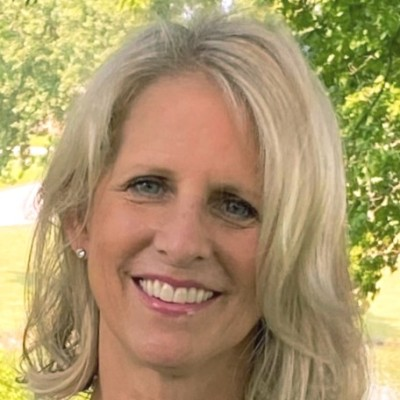
The fastest way to improve culture in technical services is to eliminate ambiguity, about who owns outcomes, what “good” looks like, and how work flows when complexity spikes. Lynne McGrew’s leadership footprint is tied to that kind of operational clarity, backed by public recognition for leadership in managed services.
Her culture impact shows up in how credibility is built in client-facing delivery:
- Role-model leadership in a consulting/MSP hybrid: the expectations are typically “be prepared, be accountable, be clear,” which is exactly how you reduce rework and escalation loops in services.
- Recognition as a signal of internal maturity: awards are not perfect measures, but in the MSP space, they often correlate with operational hygiene – manager rhythms, documented processes, and service consistency.
Culture move to copy: Introduce a weekly “service friction review” (top 3 recurring issues + root cause + owner). Culture improves fastest where teams remove the same pain twice.
5) Erica Martinez-Rose — Co-Founder & CEO, Tech Rage IT

Some leaders build culture with mission statements. Erica Martinez-Rose builds it with accountability rhythms: how leaders interact, how decisions get made, and how customer-centric intent becomes consistent execution. Her work and profiles emphasize small-business IT support and the customer experience as a central operating standard, not an afterthought.
Where her approach aligns with workplace culture innovators:
- Customer experience as a cultural competency: her bio emphasizes commitment to small-business support and positive customer experience – critical in MSP environments where culture is felt through every ticket.
- Operating cadence matters: Tech Rage IT has published guidance around productive staff meetings in the MSP sector: practical, culture-shaping mechanics rather than generic inspiration.
- External validation: she was named a finalist in the MSP Titans of the Industry Awards (Minority Owned/Led category), adding third-party context to her leadership profile.
Culture move to copy: Standardize meeting outputs: every meeting ends with decisions, owners, and due dates, then review completion weekly.
6) Crystal Calouro — CEO & President, AdvanTech

A culture that scales in managed services usually rewards prevention: documentation, automation, and proactive risk reduction, not just heroic firefighting. Crystal Calouro’s leadership positioning is consistent with that prevention-first mindset, framed around helping businesses secure and streamline technology in a structured way.
Why she fits the transforming tech culture theme for SMB tech:
- Cross-functional leadership: AdvanTech notes she oversees daily operations across administrative, customer relations, and technical departments – important because culture breaks when functions operate as silos.
- Operational accountability: the role description emphasizes sustaining corporate initiatives, which is a culture marker: execution is expected, not optional.
- Human-factor awareness: even public programming featuring her frames cybersecurity through human behavior – an indirect but meaningful signal that culture is treated as part of risk reduction.
Culture move to copy: Make “root-cause resolution” a formal expectation. Track repeat-incident reduction as a team KPI, because fewer repeats are the clearest proof your culture is improving.
7) Melanie Schilling — CEO/President, TEC Communications

Longevity in a client-facing tech services business usually comes from one thing: standards that outlast market shifts. Melanie Schilling’s long-running leadership narrative emphasizes continuity of core values, high standards, and team dedication – signals of a culture designed for reliability rather than hype.
Her culture relevance for SMB tech leaders:
- High-standards continuity: her leadership profile highlights sustaining core values and team dedication over decades – exactly what many MSPs struggle to do during growth spurts and toolstack changes.
- Client-aligned delivery: descriptions emphasize tailored solutions aligned to business needs, which is culturally downstream from listening, clarity, and accountability.
Culture move to copy: Publish “how we serve” standards (response expectations, escalation etiquette, update cadence), then audit them monthly with real ticket samples.
8) Michelle Accardi — CEO, Logically (Managed IT + Cybersecurity)

Growth, especially acquisition-driven growth, is where culture usually cracks: tool sprawl, inconsistent service norms, and “us vs. them” subcultures. Michelle Accardi’s leadership era at Logically was explicitly framed around guiding continued growth, with strong emphasis on building a modern managed IT and cybersecurity business that could scale.
Why she qualifies as a workplace culture innovator in MSP/MSSP scale-up dynamics:
- Culture during rapid growth: the CEO announcement explicitly frames a “next phase” of rapid growth, where consistent service culture is often the differentiator.
- Leadership through change: channel reporting notes her background in driving growth and M&A, which typically requires deliberate culture integration rather than “hope it works out.”
Culture move to copy: In any scale or acquisition moment, run a 90-day “culture integration plan” (tooling, handoffs, service standards, and manager expectations) with weekly checkpoints.
9) Naomi Shine — CEO, Executech

A leadership transition is often a culture moment: it clarifies what the organization wants more of: growth, consistency, or a renewed focus on people. Naomi Shine’s appointment messaging emphasized building on a foundation of growth, passion, and excellence – language that typically signals a “high-standards, people-forward” culture in delivery organizations.
What stands out from a culture perspective:
- People-first language with performance intent: her intent to build on “growth, passion, and excellence” is the kind of framing that supports female-led organizational change without losing the performance bar.
- MSP reality alignment: in managed services, “excellence” has to show up in ticket quality, responsiveness, and consistency; culture is the mechanism that makes those repeatable.
Culture move to copy: Turn “excellence” into three observable behaviors (e.g., proactive updates, clean documentation, and root-cause resolution) and coach those weekly.
10) Nina Vaca — Founder, Chairman & CEO, Pinnacle Group / PTR Global

In workforce and IT talent businesses, culture is not adjacent to the product – it is the product. Nina Vaca’s leadership narrative is consistently framed around connecting people with opportunity, supported by a long-running platform of recognition in the staffing industry.
Why she belongs in a list built for SMB tech readers (not unicorn celebrity worship):
- Opportunity + execution framing: “connect people with opportunity” is values language, but it also translates into operating practices: career pathways, accountability, and inclusion, making her a credible reference point for DEI tech leaders who want results, not slogans.
- Industry recognition: Staffing Industry Analysts’ honoree listing provides additional third-party context for her influence in the workforce space.
Culture move to copy: Build a visible internal mobility system (skills frameworks + mentorship + promotion readiness criteria). In people-driven businesses, retention is culture’s most honest KPI.
What SMB tech teams can copy this quarter
If you want to operationalize what these workplace culture innovators are doing, start with a 30-day culture sprint:
- Define 3–5 non-negotiable behaviors (not adjectives).
Example: “We do not ghost—internally or externally.”
- Instrument your culture with 5 metrics
- Voluntary attrition (by team/manager)
- Internal mobility / promotions
- Ticket re-open rate (quality proxy)
- Employee eNPS or pulse score
- Manager 1:1 completion rate
- Voluntary attrition (by team/manager)
- Install two rituals
- Weekly “wins + learnings” (recognition + continuous improvement)
- Monthly retro on one operational pain point (handoffs, onboarding, response cadence)
- Weekly “wins + learnings” (recognition + continuous improvement)
- Make DEI concrete
- Ensure every role has clear competency criteria
- Track candidate pipeline mix and promotion readiness
- Reward inclusive leadership behaviors
- Ensure every role has clear competency criteria
Final Thoughts: Culture is the competitive advantage customers can feel
Every CEO on this list proves the same point: culture is not a perk program; it is execution. If you are a growing SMB that wants fewer disruptions, less internal tech anxiety, and a more scalable operating model, an all-inclusive MSP approach can be a meaningful lever, especially when it reduces the noise that burns teams out.
Learn more about Cortavo and how an all-inclusive model supports sustainable, high-performance work environments.
FAQ
How do you improve workplace culture?
Improving workplace culture starts with diagnosing what employees actually experience (not what leadership intends), then fixing the highest-friction systems: manager 1:1s, role clarity, recognition, and decision-making. In SMB tech, you will typically see the fastest lift by standardizing communication norms, reducing meeting noise, and rewarding prevention (documentation, automation, root-cause fixes) instead of heroics.
How do you change company culture (without it feeling performative)?
You change culture by changing the systems that shape behavior – how people are rewarded, how decisions get made, what gets measured, and what managers coach weekly. Define 3–5 non-negotiable behaviors, operationalize them in onboarding and performance reviews, and run a 30–90 day plan with benchmarks so culture change is visible and trackable.
What is a “culture of innovation” in the workplace?
A culture of innovation is an environment where people feel safe to share ideas, test improvements, and challenge “the way we’ve always done it,” with leadership support and clear follow-through. The key point: innovation becomes everyone’s job, not a one-team function, supported by recognition and resources.
How do you build a culture of innovation without breaking what already works?
Use guardrails: protect core service quality while running small experiments. Create a lightweight “experiment lane” (time-boxed pilots, clear owners, defined success metrics), then scale only what works. This approach enables transforming tech culture while minimizing delivery risk in SMB service environments.
What DEI questions should leaders ask to improve culture?
High-impact DEI questions focus on accountability and outcomes, such as: How do we define DEI here? What measures are we using? Where are we losing talent? Are promotion criteria consistent? What barriers do specific groups face? Treat these as operational questions, then publish progress internally so DEI tech leaders drive measurable workplace culture innovator results.